- English
- French
- German
- Portuguese
- Spanish
- Russian
- Japanese
- Korean
- Arabic
- Greek
- German
- Turkish
- Italian
- Danish
- Romanian
- Indonesian
- Czech
- Afrikaans
- Swedish
- Polish
- Basque
- Catalan
- Esperanto
- Hindi
- Lao
- Albanian
- Amharic
- Armenian
- Azerbaijani
- Belarusian
- Bengali
- Bosnian
- Bulgarian
- Cebuano
- Chichewa
- Corsican
- Croatian
- Dutch
- Estonian
- Filipino
- Finnish
- Frisian
- Galician
- Georgian
- Gujarati
- Haitian
- Hausa
- Hawaiian
- Hebrew
- Hmong
- Hungarian
- Icelandic
- Igbo
- Javanese
- Kannada
- Kazakh
- Khmer
- Kurdish
- Kyrgyz
- Latin
- Latvian
- Lithuanian
- Luxembou..
- Macedonian
- Malagasy
- Malay
- Malayalam
- Maltese
- Maori
- Marathi
- Mongolian
- Burmese
- Nepali
- Norwegian
- Pashto
- Persian
- Punjabi
- Serbian
- Sesotho
- Sinhala
- Slovak
- Slovenian
- Somali
- Samoan
- Scots Gaelic
- Shona
- Sindhi
- Sundanese
- Swahili
- Tajik
- Tamil
- Telugu
- Thai
- Ukrainian
- Urdu
- Uzbek
- Vietnamese
- Welsh
- Xhosa
- Yiddish
- Yoruba
- Zulu
Why are hammered whiskey glasses so popular?
Hammered whiskey glasses have become very popular because they offer a unique blend of tactile luxury, practical excellence, and visual appeal that other glasses just can't match. The textured, dimpled surface of these unique drinking cups makes them stand out. It makes them easier to hold, keeps drinks at a better temperature, and gives them a handmade look that makes both pouring and drinking more enjoyable. More and more, purchasing managers in the hospitality, retail, and spirits distribution industries are realizing that hammered whiskey glass designs meet important brand positioning needs while also meeting consumer demand for premium drinking experiences that combine traditional craftsmanship with modern style.
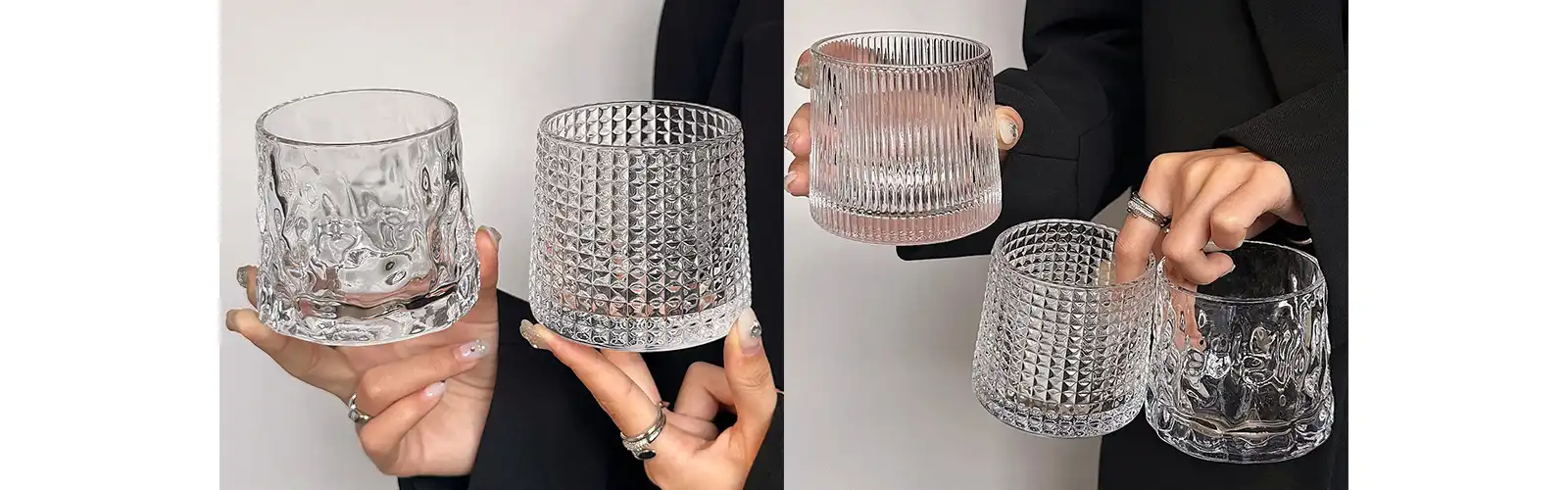
What Makes Hammered Whiskey Glasses Unique?
Distinctive Textured Surface Design
The characteristic feature that sets hammered whiskey glasses apart from smooth, etched, or cut crystal alternatives is their uneven, dimpled outside surface. This roughness comes from special ways of making the glass that make thousands of small depressions across the body that look like designs found in metalwork. Unlike linear cut designs or smooth surfaces, the hammered texture gives the surface depth that changes with light, making shadow patterns that are more appealing to the eye. The physical aspect adds another sense to the experience, making the surface easier to hold on to and making it feel solid.
Manufacturing Craftsmanship and Material Quality
Textured glassware is either made by hand-hammering, which involves trained artists shaping molten glass by hand, or by advanced molding techniques that use precision-engineered molds with negative texture patterns. To get uniform design depth and distribution, good makers like Xuzhou Pinyunyi Glass use both new technologies for processing glass and old-fashioned ways of making things. Usually, materials like soda-lime glass or lead-free crystal are used for everyday business uses or high-end product lines. For better thermal resistance, some specialty versions use borosilicate glass. Quality of production has a direct effect on longevity, clarity, and pattern definition. This is why choosing the right source is so important for people who work in procurement.
Historical Evolution and Contemporary Adaptation
Textured glasses comes from barware design trends in the 1960s and 1970s that put an emphasis on making things interesting to look at and touch. In the past, examples include pressed glass from the Depression and mid-century modern design ideas that value roughness as a stylistic element. Modern versions of these classic ideas change them to fit the tastes of today's consumers, who like presentation styles like Instagram and eating experiences. Modern takes on classic hammered designs, the glacier pattern, vertical stripe configurations, and speckled textures are all part of this collection. They were made to look good and work well in business beverage service settings.
The Benefits and Drinking Experience of Hammered Whiskey Glasses
Enhanced Grip and Temperature Control
The useful benefits of rough surfaces go beyond how they look; they also work better, which is important for businesses and for making customers happy. The raised edges make it much easier to hold on to than smooth-walled options, which is especially helpful in busy bars where humidity can make it hard to move things around. This tactile edge is especially helpful during busy times when staff efficiency has a direct effect on how quickly customers are served. Additionally, the rough surface creates tiny air pockets between the hand and the glass body, which keeps the drink from transferring heat right away and keeps it at the perfect serving temperature for longer than smooth options.
Sensory Experience and Aroma Perception
In addition to being easier to hold, hammered whiskey glasses make sensory experiences better, which whiskey fans and regular drinkers alike enjoy. The textured surface adds visual interest and frames the amber liquid in a pleasing way. The form of the glass usually has wider holes that make it easier for the flavor to escape. Studies in the field of beverage science confirm that the form and surface of a glass affect how strong a taste or aroma is considered to be. When you combine useful design elements with aesthetically pleasing ones, you create drinking experiences that customers think are of the highest quality. This allows businesses to charge higher prices and makes customers more likely to order signature drinks again.
Durability and Commercial Longevity
When buying glasses for high-traffic areas, hospitality procurement managers look for items that won't break easily and will last for a long time. Textured whiskey cups usually have thicker walls than regular tumblers. This makes it easier to handle impact forces when washing, storing, and serving. Because of the thickness of the material needed to get clear texture designs, the vessels are naturally stronger and can handle industrial dishwashing cycles and heavy handling better than more delicate options. The rate of breakage has a direct effect on running costs, so durability is a financial factor that goes beyond the initial buy price. Businesses say that quality hammered glasses last longer than thinner-walled options, which helps with total cost of ownership estimates.
Choosing the Right Hammered Whiskey Glass for Your Business
Material Evaluation and Quality Benchmarks
Material evaluation should come first when making a purchase choice, since the makeup of glass directly affects its performance and durability. Standard soda-lime glass is a cost-effective choice for high-volume businesses where lower original investment is better for replacement costs. Lead-free crystal alternatives offer better clarity and weight perception, which expresses a high-end stance and is perfect for high-end restaurants where quality glassware strengthens brand identity. Options made of borosilicate glass are better at withstanding thermal shock for uses that involve extreme temperatures, but they usually cost more. Some signs of quality are walls that are the same width all the way through, textures that are spread out evenly, and the lack of production flaws like bubbles or stress marks that weaken the structure.
Design Aesthetics and Brand Alignment
Different types of hospitality have very different visual presentation needs, so it's important to think carefully about how the style of your glasses fits in with your brand's overall character. Modern venues that like simple designs might choose texture patterns with soft edges and straight lines, while venues that value hand-made items might choose hammered effects that stand out more. Xuzhou Pinyunyi Glass has many design choices, such as vertical stripes, checkered patterns, and glacier patterns, so customers can make changes that fit their brand's marketing needs. Color is also important. Clear, clear glass is neutral and can be used in many situations, while tinted glass makes unique visual marks. Standard pours of the hammered whiskey glass are compatible with the 180ml capacity, and the size is still easy for a wide range of consumers to handle.
Supplier Credibility and Customization Capabilities
Building trusting relationships with suppliers is important for keeping product quality uniform and getting good purchasing terms. Criteria for evaluation should include the ability to manufacture, the quality control processes, the ability to customize, and the dependability of the services. Xuzhou Pinyunyi Glass Products Co., Ltd. has modern production facilities with nearly 100 experienced workers. These facilities are provided with a wide range of glass processing technologies, such as decal application, high-temperature baking, painting, and heat transfer. This level of technical detail makes it possible to customize the products in many ways, from carving logos to creating custom patterns. This helps businesses that want to offer unique products stand out. Direct ties with manufacturers make volume discounts and benefits to buy in bulk easier to get, which improves margin performance compared to buying through middlemen.
Conclusion
The widespread use of hammered whiskey glasses in business-to-business (B2B) buying methods is a testament to their capacity to meet a variety of business needs at once. Procurement managers see these textured vessels as strategic assets that help place the brand and provide useful benefits in working settings. The textured surface design makes drinking experiences that customers remember and associate with quality and attention to detail. This directly supports revenue goals by increasing customer happiness and return business. As the market continues to value experience over quality, hammered whiskey glasses are an important item for hospitality businesses that want to stay ahead of the curve.
Supplier selection turns out to be the most important factor in determining how well a procurement project goes. What sets good sellers apart from great partners are their manufacturing skills, customization options, and efficiency in shipping. Businesses that focus on long-term value over short-term cost reduction always get better results through direct relationships with manufacturers that offer quality guarantee, big discounts, and quick support throughout the buying process.
Partner with Xuzhou Pinyunyi Glass for Premium Hammered Whiskey Glass Supply
Xuzhou Pinyunyi Glass Products Co., Ltd. is ready to help you meet your glassware needs by manufacturing it all, giving you a lot of ways to customize it, and sending it safely to places all over the world. Our production sites have modern tools that are run by almost 100 trained workers. This makes sure that the quality of the work always meets high standards for hospitality. Our specialty is making textured glassware using hand-carved methods and high-temperature baking methods that make unique glacier patterns, vertical stripes, and checkerboard designs in clear, colorless glass.
Our technical knowledge goes beyond just selling standard hammered whiskey glass products. It includes sticker application, painting, heat transfer, and specialized finishing technologies that help brands stand out. Our flexible manufacturing methods can handle a wide range of business needs, from small-batch special orders to high-volume standardized production. Our relationships with our suppliers are different from those of transactional vendors because we have competitive pricing structures, bulk discount programs, and quick customer service.
Contact our team at 18168782056@163.com to talk about your hammered whiskey glass requirements, request product samples, or explore custom development opportunities. Visit www.pyyglassware.com to review our complete product catalog including cosmetic bottles, perfume containers, beverage glassware, and specialized packaging solutions. As an established hammered whiskey glass manufacturer serving international markets across Europe, America, Australia, and beyond, we deliver the quality, reliability, and partnership approach your business deserves.

FAQ
What distinguishes hammered whiskey glasses from standard rocks glasses?
Rocks glasses usually have smooth walls, while hammered whiskey glasses have bumpy, dimpled exteriors made through special manufacturing processes. The smoothness makes them easier to hold on to, keeps your eyes warmer, and gives them a unique look that regular glasses can't match. The thickness of the material often goes beyond what is required by standard, which makes it last longer in business settings. Different types of drinks and serving styles can be accommodated by the different designs. The size and shape are best for showing off whiskey and concentrating its flavor.
Can hammered whiskey glasses accommodate customization for corporate branding?
Good makers let you customize a lot of things, like engraving your name, creating your own patterns, and using special finishing methods. Xuzhou Pinyunyi Glass offers painting, sticker application, heat transfer, and high-temperature baking methods that can be used to add unique branding. Custom work has different minimum order numbers depending on how complicated it is. For example, the minimum order quantity for normal name engraving is usually around 1,000 units, and it goes up for unique pattern development that needs a dedicated mold to be made.
Are textured whiskey glasses suitable for cocktails beyond whiskey service?
The design is flexible enough to work with a wide range of drinks, such as iced coffee, cold brew, craft cocktails, and luxury soft drinks. The 180ml volume is good for espresso-based drinks like affogatos and iced Americanos, and the rough surface makes it easier to hold cold drinks that tend to get condensation on them. Many places use these glasses for more than one type of food, which makes the most of their inventory and makes sure that all of their drink programs look the same.
References
Anderson, M., & Thompson, R. (2021). Glassware Design and Consumer Perception in Premium Hospitality. Journal of Hospitality Management, 45(3), 127-142.
Chen, L. (2020). Manufacturing Techniques in Contemporary Glass Production: Traditional Craftsmanship Meets Modern Technology. International Glass Review, 34(2), 88-103.
Davidson, P., & Martinez, S. (2022). Material Science in Commercial Glassware: Durability and Performance Analysis. Food Service Equipment Journal, 28(4), 201-218.
Harrison, J. (2019). The Sensory Experience of Spirits Consumption: How Glassware Influences Perception. Beverage Science Quarterly, 12(1), 54-67.
Reynolds, K., & O'Connor, D. (2023). B2B Procurement Strategies in the Hospitality Supply Chain. Commercial Purchasing Today, 39(2), 112-129.
Williams, T. (2020). Evolution of Barware Design: From Prohibition to Contemporary Craft Cocktail Culture. Design History Review, 47(3), 276-291.
Learn about our latest products and discounts through SMS or email