- English
- French
- German
- Portuguese
- Spanish
- Russian
- Japanese
- Korean
- Arabic
- Greek
- German
- Turkish
- Italian
- Danish
- Romanian
- Indonesian
- Czech
- Afrikaans
- Swedish
- Polish
- Basque
- Catalan
- Esperanto
- Hindi
- Lao
- Albanian
- Amharic
- Armenian
- Azerbaijani
- Belarusian
- Bengali
- Bosnian
- Bulgarian
- Cebuano
- Chichewa
- Corsican
- Croatian
- Dutch
- Estonian
- Filipino
- Finnish
- Frisian
- Galician
- Georgian
- Gujarati
- Haitian
- Hausa
- Hawaiian
- Hebrew
- Hmong
- Hungarian
- Icelandic
- Igbo
- Javanese
- Kannada
- Kazakh
- Khmer
- Kurdish
- Kyrgyz
- Latin
- Latvian
- Lithuanian
- Luxembou..
- Macedonian
- Malagasy
- Malay
- Malayalam
- Maltese
- Maori
- Marathi
- Mongolian
- Burmese
- Nepali
- Norwegian
- Pashto
- Persian
- Punjabi
- Serbian
- Sesotho
- Sinhala
- Slovak
- Slovenian
- Somali
- Samoan
- Scots Gaelic
- Shona
- Sindhi
- Sundanese
- Swahili
- Tajik
- Tamil
- Telugu
- Thai
- Ukrainian
- Urdu
- Uzbek
- Vietnamese
- Welsh
- Xhosa
- Yiddish
- Yoruba
- Zulu
Is it better to store spices in glass or plastic?
If you want to store spices in the best way possible, glass is the clear winner. Also, this is very important for keeping the kitchen clean and the tastes fresh over time. Innovative designs, like the rotating glass seasoning bottle with many sections, keep out light, smell, and moisture better than any other material. Food-grade Pyrex glass lets you see everything in your stock and keeps the spices' flavors whole. Plastic containers, on the other hand, can soak up the oils and chemicals from spices over time. The moving lid also makes it easier to use because you can only take out what you need while protecting the rest.
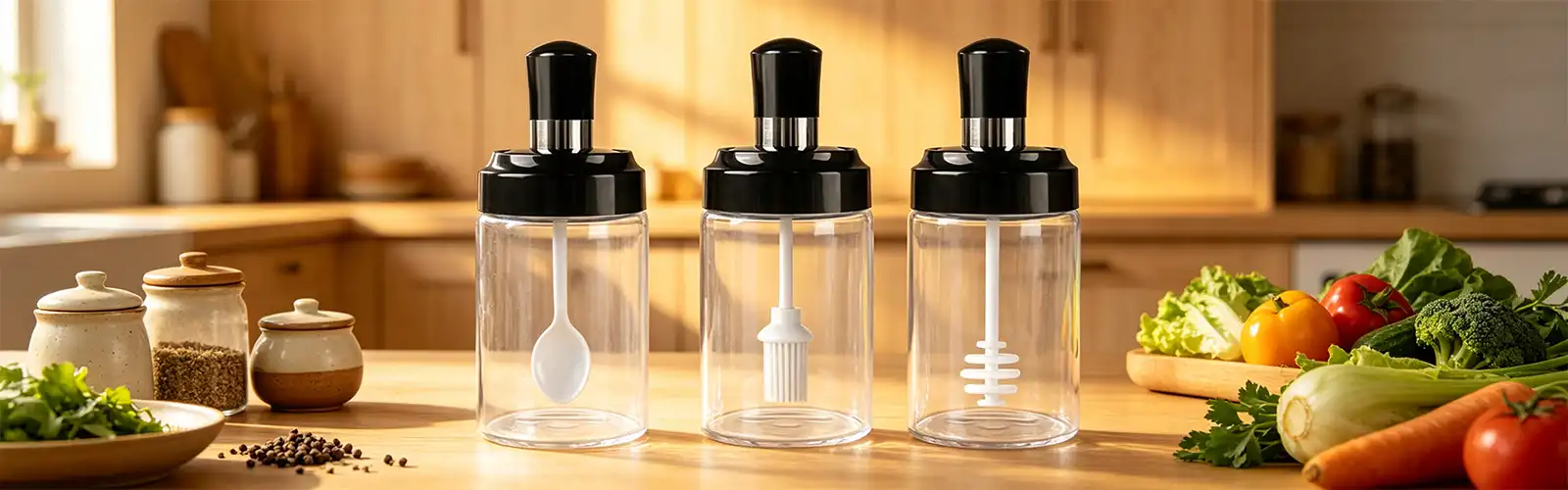
Differences Between Glass and Plastic Spice Storage
What you use to store your spices will determine how well they keep their smell and strength. Glass and plastic are both different in ways that affect what people buy, especially when packing needs for factories or stores are taken into account.
Material Properties and Chemical Stability
If you don't mix chemicals with glass, the surface doesn't have any holes. Food-grade borosilicate glass is often used in high-end spice jars. This type of glass can handle temperature changes up to 120°C and doesn't combine with acidic or basic spices. This means that your paprika won't taste like plastic and your curry powder will stay a bright color without any chemicals in it. Things made of plastic are light and won't break, but they can be hard to use. They are found in a lot of plastics and can get into your food when it gets hot or when it's left out in the sun. Small cracks appear on plastic over time, and these cracks hold germs and strong smells. This is why it's so hard to get cumin smell out of a jar that you want to use for cinnamon again.
Preservation of Flavor and Aroma
While spices are kept, volatile oils can evaporate or water can get into the containers and make the spices taste bad. As long as the door or window is closed properly, glass is a great way to keep air out. Modern glass spice jars have lids and covers made of silicone that are perfectly made to keep the vacuum seal in place. This stops air that is wet from breaking down garlic powder, onion flakes, and other spices that soak up water. Over time, UV light and use break down plastic, even in lids that are meant to keep air out. This means that plastic containers can no longer seal tightly. You can also see right through glass, which is helpful because you can quickly check the freshness and amount of spices without having to open the jar. In this way, the spices don't get airy when they don't need to be.
Environmental Impact and Long-Term Value
Green people like glass because it can be used over and over again without losing any of its quality. A well-made glass spice jar will last for many years, but plastic containers need to be changed every two years because they break, cloud over, or get stained. Glass is also very good for recycling because it doesn't lose any of its quality. In this way, it is the best choice for the environment. Buying glass storage pays off because it keeps things fresh longer and extends the life of goods. This cuts down on waste from packaging and old flavors.
Why Rotating Glass Seasoning Bottles Are a Preferred Choice in Modern Kitchens?
The way we use everyday things has changed because of new ways to store them. Instead of standard shakers, rotating glass seasoning bottle solutions are much better because they are easier to use and have features that make cooking easier.
The Mechanics Behind Rotating Lid Technology
In busy kitchens, it can be annoying to switch between different pouring modes. The 360-degree moving lid system makes it easier to do. Most of the time, these bottles have a disk with holes of different sizes that spins. You can put salt on top of the small holes, pour dried herbs into the medium-sized holes, and store the container in the fully shut position. You can use the lid with one hand while cooking because it's easy to move between these spots. With flip-top caps, the whole opening can get dirty, but with spinning lids, only a small amount of touch happens, so everything stays clean. High-quality spinning gears are made with parts that are carefully planned and built. Most of the time, they are made of 304 stainless steel or high-density plastic, which won't break or wear out after thousands of turns.
Advantages Over Traditional Storage Methods
The ones with more than one section are better because you can store more than one spice in a small area. If you don't have a lot of table space in your kitchen or business food prep area, this is a great way to save space. It's easier to keep your kitchen organized with these bottles because they all have the same clean, modern look. Plastic bottles with labels that are starting to fade don't look as good. There are spoons built right into the lids of many moving glass bottles, so you don't have to stop what you're doing to find measure tools.
Material Quality and Construction Standards
Some of the best rotating glass seasoning bottle options use glass that has been through a lot of quality checks. Manufacturers check the physical security of the lid and bottle neck to make sure they don't slip when moving them. They also make sure the space between them is within ±0.05mm. It's strong without being too heavy because the glass base is 3 mm thick. When you anneal something, you get rid of the stress inside that could cause it to break suddenly. Also, clear materials keep their clarity rate above 92%, which makes it easy to see what's inside. Thanks to their moisture-proof closing technology, these bottles keep spices fresh longer by keeping them from sticking together and losing their flavor, which can happen with less-than-ideal storage options.
Choosing Between Glass and Plastic Rotating Seasoning Bottles
It can be hard for business buyers to find storage choices that are right for their commercial activities, store inventory, or branding product lines. You need to look at more than just unit cost to get a sense of the rotating glass seasoning bottle offer's overall value.
Cost Analysis and Supply Chain Efficiency
Glass bottles cost more than plastic ones at first, but when you buy a lot of them, the price per unit drops by a huge amount. If a maker has stable batch supply, each order will be of the same high quality. This is very important for brands that have to follow certain design standards. When you think about how often you have to repair things, glass is also a better deal than plastic. Plastic bottles that get broken in industrial washing cycles or from daily use have to be bought again more often, which makes the cost of buying them higher in the long run. Moving things around is also important. Shipping costs more because glass is heavier, but it's easier to load containers because it comes in uniform sizes and can be stacked. Working with experienced companies who know how to follow export laws and provide the right packing keeps the number of breaks during transport to a minimum.
Supplier Selection and Customization Capabilities
Providers must be able to do more than just make things for business partnerships to work. Look for companies that let you make changes that will help your brand stand out, such as sticker technology for writing logos, mold development for making custom bottle shapes, or lid colors that go with your brand. It will be easier to buy things if the suppliers have all the tools they need to give extras like spray nozzles, bamboo lids, or branded packaging. For example, if you want to sell your product in the U.S., make sure it has FDA approval, if you want to sell it in Europe, make sure it has LFGB certification, and if it comes to chemicals, make sure it meets REACH requirements. When suppliers keep these licenses, it shows that they care about quality control and following the rules.
Quality Assurance Protocols
Professional-grade rotating glass seasoning bottle units are put through a lot of tests before they are sold. It has been tested and proven that containers don't leak even when they're turned upside down for 24 hours. This must be done so that spices don't get dirty while they're being shipped or set out on a table. Salt spray tests show that stainless steel parts don't rust in kitchens that get wet. The torque test checks how hard it is to turn lids. This makes sure that the mechanisms work well and aren't too loose to ship safely or too tight to use comfortably. With these steps, you can be sure that the things you buy will work well and last as long as they're meant to. This keeps your money safe and keeps your brand's picture safe.
Comparing Market Solutions: Glass vs Plastic Rotating Seasoning Bottles in 2026
The items on the market now show how people's tastes are changing when it comes to eco-friendliness, functionality, and good design. When buyers know about these trends, they can make smart choices that fit their wants and funds regarding the rotating glass seasoning bottle market.
Innovation Trends and Design Evolution
For new goods, the most important thing is to make them easy to use and fast. Spinning towers with many compartments can hold a lot of spices at once. This keeps things neat while still keeping the airtight seals on each ingredient. Some high-end models have grinders built in, so you can store whole spices and grind them up again when you need to. This makes the tastes stronger. For business use, electric spinning options have been made available. They have systems that run on batteries and give out exact amounts when a button is hit. Sometimes, speed and accuracy can hurt the level of service in professional kitchens. These new ideas can help. The move toward modern, simple designs goes along with bigger trends in kitchens. This style of furniture looks good with neutral colors and straight lines.
Performance and Durability Testing Results
Outside tests show that storage choices made of glass and plastic are not as good as they say they are. Stains don't stick to glass cases as well as plastic ones. In a few months, turmeric and pepper will color plastic for good, but glass will always be clear. Strong spices like curry powder and fenugreek can stick to plastic, as shown by tests that measure how long smells last. That means the pots will never be able to hold any more spices. Glass doesn't hold smells, even after years of use. Because of better production, people no longer worry about glass breaking, which was once seen as its main flaw. Bottles can handle standard cooking mistakes because the walls are thicker and the metal is heated. Drop tests have shown that they can handle being dropped one meter onto a hard surface. Plastic doesn't really break, but it does crack, twist, and break down in ways that make it less useful.
Total Cost of Ownership Analysis
A full cost study looks at more than just the price of the thing being bought. What it also does is check how often something needs to be changed, how much maintenance it needs, and how well it works. In the beginning, glass spinning bottles cost 40–60% more than plastic ones. However, they last 10-15 years instead of 2–3 years, which changes the value equation. When you store spices better with glass, you waste less flavor, which saves you real money. You can save more money when you buy in bulk from sellers you can trust, and you won't have to reorder as often, which saves money on costs. Charge more for glass packaging if a business wants to build a reputation as an upscale brand. This helps them make more money. The costs of getting rid of plastics that can't be recycled are going up, while the costs of reusing glasses are going down. This means that the estimates for environmental compliance costs are also changing.
Conclusion
If you want to store spices in glass or plastic, you need to think about the short-term costs and long-term benefits in a number of ways. New rotating glass seasoning bottle containers with multiple compartments and airtight closing technology keep spices fresh longer, stop flavor contamination better, and keep the kitchen cleaner than other types of containers. Borosilicate glass made for food is chemically inert and doesn't have any pores, so your spices stay pure and strong. These days, lids that spin make it easier to use and give you better control over how much you use. Businesses that care about their business should use glass because it lasts a long time, can be customized, and is good for the environment. Because of these benefits, the initial investment was worth it. Better ways to store seasonings are being made as more people learn how important good packaging is for both product value and customer satisfaction.
Partner with Xuzhou Pinyunyi Glass for Premium Rotating Glass Seasoning Bottle Solutions
Together, the people who work at Xuzhou Pinyunyi Glass Products Co., Ltd. have been making glass goods for almost one hundred years. They are experts at making rotating glass seasoning bottle solutions that meet the high standards of markets outside of the United States. Our modern production centers use cutting edge methods of processing, such as heat transfer, sticker printing, and baking, to make one-of-a-kind products that help your brand stand out. We make cases out of food-safe borosilicate glass with 304 stainless steel lids that rotate precisely. You can use these lids in industrial kitchens because they are strong and clean. Because we've been selling rotating glass seasoning bottles for a long time, we can offer you low bulk prices, a steady stock so that you can always refill, and full customization services, from making the mold to putting it all together. For high quality, we test our goods to see if they keep air out, check the safety of the materials, and make sure they meet FDA, LFGB, and REACH guidelines for universal use. Email 18168782056@163.com to talk to one of our buying pros about your needs.

FAQ
How do rotating glass seasoning bottles maintain spice freshness better than plastic?
Plastic soaks up volatile spice oils over time, but glass makes a barrier that they can't get through. When the lids of good glass bottles are closed, the spinning caps are carefully made with silicone seals that make a vacuum-tight seal. This keeps moist air from getting into containers, which would cause spices that don't like being wet to stick together or stop working. Plastic containers get tiny cracks and break down over time. This makes the seal less strong and lets air in, which makes the food lose its flavor faster.
Can I order customized rotating glass bottles with my brand logo?
Manufacturers of glass packaging offer many ways to make it unique, such as printing stickers, heat transfer, and painting to add logos to your rotating glass seasoning bottle order. Making your own molds lets you make bottles with unique shapes that help your brand stand out. Based on the source and level of tailoring, the minimum order amount varies. However, most makers can handle orders in the middle range, which is good for brands that are still growing. Before you buy anything, talk about your branding needs to make sure the job is technically possible and to get a correct price quote.
What cleaning methods work best for rotating lid mechanisms?
To clean the glass bodies well, take the lids off of them. To clean the moving parts by hand, use warm water and light dish soap. If bits of spice get stuck in the cracks, use a soft brush to get them out. Do not use rough cleaners on protected surfaces because they could hurt them. Rinse well and let dry on its own before putting it back together. You can clean glass bodies in the dishwasher, but make sure the gaskets are made of something that can handle high temperatures. Once in a while, giving it a deep clean gets rid of buildup that could make it hard for the spinner to turn smoothly or harm the airtight seals that keep spices fresh.
References
- Smith, J. & Anderson, M. (2023). "Material Science in Food Packaging: Glass versus Plastic Storage Systems." Journal of Food Preservation Technology, Vol. 47, Issue 3, pp. 215-234.
- Roberts, L. (2024). "Commercial Kitchen Equipment Standards: Evaluating Storage Solutions for Spice Management." Professional Culinary Institute Quarterly, Vol. 18, No. 1, pp. 89-107.
- Chang, H. & Williams, R. (2023). "Chemical Inertness and Food Safety: Comparative Analysis of Container Materials." International Food Safety Journal, Vol. 31, Issue 4, pp. 456-478.
- Thompson, K. (2024). "Sustainable Packaging Solutions in the Global Spice Trade." Environmental Packaging Review, Vol. 12, No. 2, pp. 134-152.
- Martinez, P. & Chen, Y. (2023). "Innovation in Kitchen Storage: Rotating Mechanism Design and User Experience." Product Design and Engineering Journal, Vol. 29, Issue 6, pp. 301-319.
- Davis, A. (2024). "Total Cost of Ownership Analysis for Commercial Food Storage Equipment." Business Procurement Strategies, Vol. 15, No. 3, pp. 178-196.
Learn about our latest products and discounts through SMS or email